Sunday, May 7, 2017

How To Talk To Your Principal About Math


It's that time of year again when teachers and principals are meeting to have conversations about their evaluations. Most teachers I talk with would rather have their supervisors watch them teach reading or writing because they live and breathe reading. They are comfortable with the pedagogy, the developmental stages of reading and writing as well as having an impressive collection of engaging materials and projects. 
When it comes to math, however, although teachers feel they can teach math, they're unsure of what to talk about when discussing math learning in the classroom. 
I thought about some of the "big" questions you might hear from your principal around math, including goals, instructional strategies, how you keep students engaged and  how you assess students for math understanding. 
I created a short cheat sheet with 40 talking points to help teachers and principals have meaningful conversations around the math their students are learning. 


                                           How to Talk To With Your Principal About Math

Sunday, November 13, 2016

Are 3rd Graders Too Young for Proportional Reasoning?


     Getting third graders to think proportionally is a fantastic way to encourage modeling, and to “prime the pump” for proportional thinking when working with fractions. Simple proportional thinking can be so clearly seen with models that it is accessible to all students. There are so many real-world contexts relating to proportions that are near and dear to a third graders heart! Think about candy, carnival prizes, field trips and much more.

     An added bonus – math work that lends itself to modeling and is easy to justify with a model. I asked students to examine a small bag of M & Ms. Based on the number of each color in the small bag, students needed to figure out how many of each color would be in a giant bag of M & Ms. Students were busy grabbing their colored pencils and large mat papers before we even answered the last “need more information question”.


     Added, added bonus – many students were able to make a connection to multiples with this activity. Some students began to take shortcuts, which is just really using math in the most efficient way, by using ideas of multiples.


Explore My Store @
https://www.teacherspayteachers.com/Store/Math-It-Works
 

Saturday, October 22, 2016

Calling All 5th Graders!


Get Ready to Problem-Solve

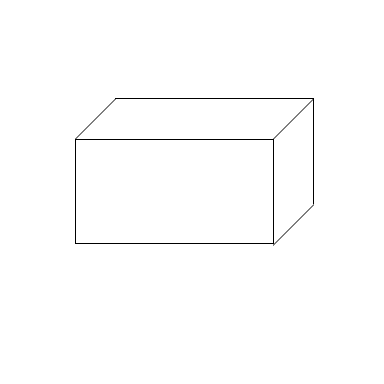
One of my favorite strategies I use when problem-solving is to work backwards. So when I think of a problem that almost forces you to work backwards, it gets put into play! This is a volume problem so your students may not be ready yet, but keep it in mind when you're ready to teach volume.

Question: What are the dimensions of the box below?
What we know:

*** The total volume is 54 cubic inches.
*** The box is twice as long as it is wide.

*********************************************************

There are several ways students could approach this problem. They could guess and check, which is a great way to plunge in and begin solving a problem! As a teacher, I would be paying attention to what numbers they begin with. After working with multiplication for awhile, we hope that students understand how quickly, or exponentially numbers can grow when multiplying, so smaller numbers are called for here. 
Another strategy might be to divide 54 by 3 and start there. However,  if the length, width, and height are 16 inches each, the resulting volume would be much larger than 54 inches cubed.
I played around with factoring numbers and working with primes, which was fun, but a little beyond 5th grade standards (not that they couldn't do it!). 
As a fifth grade student, I'm pretty sure I would have worked backwards - first thinking of an even number for the length and half of that number for the width. Say, 8 and 4. Then I would see if I could make the height work. 
This particular problem is great because you can substitute so many numbers to make it more difficult, even sneaking in a decimal!
Have fun!

Saturday, September 17, 2016

Should I Go All the Way with Multiplication Facts?

I've been getting a lot of questions from 3rd grade teachers whether they should teach multiplication facts through 9 (Common Core State Standard 3.OA.7; By the end of Grade 3, know from memory all products of two one-digit numbers), or push ahead and work on products involving factors of 10, 11 and 12. 

Most 3rd grade teachers will tell you how difficult it is for students to achieve complete fluency by the end of the year, so piling on more facts is the last thing they want to do!

However, working on strategies to learn double digit multiplication facts is a fantastic opportunity to illustrate, and reinforce key learnings from 3rd grade.

It is essential for 3rd graders to learn how to multiply a single digit by a multiple of 10 as quickly as possible. Aside from being a great preview to the work they will be doing in 4th and 5th grade with base ten, they catch on quickly and this one skill will take them far in the world of multiplication. Think about it; 12 x 5 becomes (10 x 5) + (2 x 5). Students can quickly go from paper and pencil to mental math. After doing this enough times, the answer becomes memorized. 

3rd graders already need to conceptually understand the distributive property of multiplication (Common Core State Standard 3.OA.5). By decomposing 2-digit numbers to multiply easily, they will be using the distributive property over and over again. 

Finally, there is one secret math move I always show 3rd graders once they are confident multiplying by 10. I write 5 x 18 on the board and ask them to solve it different ways. Providing a student doesn't think of this strategy, I write: 10 x 18 = 180 and half of 180 is 90. All of the oohhhs and aaaahhhs are music to my ears!
Math - It Workshttps://www.teacherspayteachers.com/Store/Math-It-Works


Friday, September 2, 2016

Creating an Anxiety-Free Math Classroom

One of my very first math lesson is about making mistakes. I tell my students that I LOVE math mistakes because it is the best way to start discussions, talk about out work, and teach us how to prove and justify our work. I can almost see my students breathe a sigh of relief when they realize I am not expecting them to magically perform perfectly!


The truth is, many students come to math with anxiety. Their beliefs about their abilities are tied to their self-esteem and for some students math can become  something to avoid at all costs. 

There are some things we can do, as math teachers, to alleviate children's math stress and create a safe, and supportive environment for learning math. 

1. Talk about the importance of errors. Students should look at errors as a way to learn. Jo Boaler's new book, Mathematical Mindset addresses how making mistakes grows our brains and is part of the creative process. 

2. Avoid timed tests. Timed tests create huge anxiety for students and many are beginning to rethink how effective these are in getting our students to fluency with their math facts. 

3. Provide opportunities for team work. Students can feel a sense of security when working with the support of others. Building a group consensus can build communication skills and self-confidence. 

Grab the ERROR poster as a Freebie!


Tuesday, April 7, 2015

How I'm getting 3rd Graders ready for Performance Tasks


Last year I began seriously looking at released items from Smarter Balanced, especially the performance tasks. "Wow!" I said to myself. "We've got some work to do!"

Although it is exciting to see that students will be using math seamlessly to solve real-world problems, it is daunting for classroom teachers. We have always focused on the learning of math, rather than the "using" of math

With a colleague of mine, we devised a plan. Every week, for an hour and a half, we would have students work on extended tasks that use multiple standards. We would focus on the process, not so much the answer, and we would praise, praise, praise students for their perseverance. 

Each week we would build a performance task a little harder, and a little longer as students built up their stamina and confidence. We wanted students to use different strategies to solve problems and to feel like although it was hard, it was possible to complete the task. 

Each Friday we worked with students, and each Friday at lunch, we sat and discussed what we had seen, and heard. We pondered why certain things were happening, like why students were using repeated addition for a problem that clearly called for multiplication. We thought about the right type of help to give students so as not to enable them right out of problem solving. 

So, a short recap of what we learned:  1) It is just as much about the process as it is the answer. As students actually see the improvement in "time on task" and their ability to stay focused, they become engaged in the task. 2) These tasks are hard! Our 3rd graders were using a lot of brain power to work through them. Therefore, when students kept using repeated addition until January, we didn't intervene. Repeated addition was comfortable for them, so that is what they used! 3) Scaffold, scaffold, scaffold. When we "threw" in graphs before they had worked with them and we asked them to do difficult tasks with the graphs, it was a disaster. Fast forward to a task after they had worked with graphs during class, and the task was no problem. 4) Celebrate the feeling of accomplishment when finally solving a problem - there is nothing better!

I've started bundling these tasks and putting them in my store. I'm really excited to see how these 3rd graders do on their state test!
                                               Math - It Works

Math - It Works


Friday, January 2, 2015

The Best Place Value Experience for 2nd Graders!

2nd graders need lots of experience decomposing numbers as they work with place value concepts. I often see these guys carefully pulling numbers apart: "167 is one hundred, 6 tens, and 7 ones". They are correct, but are they truly understanding place value with this exercise or just memorizing hundreds, tens and ones?

To check whether students are really thinking things through, I introduce an activity with brown paper bags. Inside the bag are flats (100s), rods (10s) and cubes (1s)


I label the bag with a number and fill the bag with a different combination of base ten blocks. Students are not allowed to open the bag!

They can pick it up to feel the weight, they can shake it up a bit, but they can't look inside. They need to make an educated guess about what combination of blocks are inside the bag. 


The bag labeled 147 can be composed of different combinations:
147 cubes
1 flat, 4 rods and 7 cubes
1 flat, 3 rods and 17 cubes
1 flat, 2 rods and 27 cubes
1 flat, 1 rod and 37 cubes
1 flat, and 47 cubes
14 rods and 7 cubes
and so on...........

It is a lot of fun for students, and as they record their guesses, they begin to really delve deeply into the concept of place value. 

Saturday, November 29, 2014

Volume Within Volume

Students need to be able to think about volume both spatially, and mathematically. They also need to model with mathematics. I recently created some problems around volume that have students determining how many smaller boxes will fit into a larger box.


Students can actually think about it spatially and use manipulatives or mentally determine how many smaller boxes will fit, or they can determine it mathematically by finding the volume of both small and large boxes, then dividing. While I was at it, I created many different problems that have students working with volume in a real-world context. The 5th graders I worked with loved working on these problems and began to notice patterns with multiples and factors. 
Math - It Works
TPT Volume Within Volume

Saturday, November 8, 2014

Free Formative Assessment Idea

As math teachers, we work really hard to assess whether students are learning, how deep their understanding is, and how well they are self-assessing their own learning. Recently I have been trying a new type (well, new to me) of formative assessment. I used large note cards and put a green, yellow and red circle on one side. 

Towards the end of a lesson, I ask my class to hold up the card with their finger over the color that represents their stage of learning. 
Each color is tied to a specific phrase. 

Red means: "I really don't understand. My learning stopped when......."

Yellow means: "I'm starting to get it. I still don't understand ......."

Green means: I understand it well. I would like to know more about......"

These can be used as exit tickets where students have to write out the answers to whatever color they chose. Once students are adept at pinpointing where they are in the learning process, they can begin to verbalize it - making it easier for us to adjust our instruction.

Math - It Works for Common Core Activities, Assessments, Games and More
Teachers Pay Teachers

Saturday, September 27, 2014

How to Differentiate in the First Grade Classroom

I've been hearing a lot from first grade teachers lately. At the beginning of the year, when they are carefully teaching "firsties" the concept of addition and subtraction by using manipulatives and pictures, they have a handful of students that not only understand the concept, but can work with the numbers easily, with little effort. So how to challenge these students while giving others the time they need to practice? 

One activity that may fill in the gap for a couple of days are missing addend flashcards. I included addition sentences with missing start, change and end numbers. I used numbers that were a little less friendly and a little larger to make it a bit more challenging. I also laminated them so they could use an Expo marker and be able to use them many times. 


Laminated addition sentences. 
One unexpected benefit from using these cards, was the connection to place value. Any missing addend paired with a 10, like ___ + 10 = 15, became easy for students once they knew to look at the ones column of the sum.


Students also began to learn about the commutative property of addition - 8 + 3 = 11 and 3 + 8 = 11. 

There is also just something about being able to use markers that kids find irresistible!


http://www.teacherspayteachers.com/Store/Math-It-Works

Saturday, September 13, 2014

Great Way To Organize Math Manipulatives

What a nice surprise waited for me when I opened up my teaching partner's math cupboard! She had all her math manipulatives organized in tubs. This makes it easy to grab what you need in a hurry. She said it works well - when her first graders are done with the materials, they know to put them back into the tub and snap on the lid. 

Most of the smaller tubs are "Ziplock" brand tubs that are meant for several uses. This is her second year of using them and they still look brand new!


The Organized Math Cupboard
Math - It Works


Friday, August 22, 2014

Great Way to Look at the Mathematical Practices

Found a poster on the Internet that grouped the Mathematical Practices into mathematical behaviors. I made a poster to remind me, as I am lesson planning, to create activities that will weave these practices into the fabric of math.


Math - It Works


Saturday, August 16, 2014

The Problem with Teaching Math After Lunch (Freebie)

Teach math after lunch? That means you have students who are suddenly sluggish and groggy. They're ready for a nap while you have visions of engaged, bright-eyed students tackling the toughest problems. 

One thing I've found helpful is to start math before they even finish walking in the door. I have a stack of "answer cards" that I lay out on the desks ahead of time. As they walk in the door I hand them a problem card. They need to solve it and find the answer. (Their desk for the day) Every day they will sit in a different spot. 

This strategy has kept students from getting too comfortable, gets them using math right away, is a great review, and sets the tone of the class. Here is a sample freebie to get you started! 


                                                                          Desk Cards

                                                                      Math - It Works

Monday, August 4, 2014

Number Hops (Freebie Included)

Have you tried a Number Hop lately? Just something I've been working on. I've had a lot of requests for quick (10 minute) warm-ups for math. Since 2nd graders work so much with place value and they really need to become fluent with numbers, I created Number Hops for 2nd grade. 


Students begin with a target number and add or subtract their way to the final number. I encourage them to do this mentally by working with tens first, then with ones. It can be done as a whole group but students really like to work on them individually. Try it out with the freebie below. I have a months supply for 2nd graders in my TPT store. 3rd, 4th and 5th grade Number Hops coming soon!


Penny


Wednesday, July 30, 2014

First day of School Activity

First ten minutes of the first day of school can seem awkward! I want students to have something to do while we wait for everyone to put their gear away and get settled. This simple activity has worked well for me.
 Use a large piece of heavy paper. Draw apple shape (This is the best I can do:)
Create interesting puzzle pieces. Make a few more pieces than students for those that join your class later in the year. 
 Write students' names and snap a quick picture so when you need to reassemble it is easier!
 First day of school, I put everyone's puzzle piece on their desk and they color them in. They can put things they like, special designs, you name it.
Throughout the day I have students work on putting the puzzle together. I don't tell them what it is and it usually takes awhile. This time gives students a chance to work together and I assess who my leaders are, who might need help with social skills, etc... 

At the end I create a bulletin board right outside our classroom door by stapling the completed apple with the heading: Room 147 "Working Together - A Perfect Fit"

Penny

Other activities for your students during the year


Monday, July 28, 2014

6 Great Ways To Learn Multiplication Facts

Third grade has become.... THE YEAR OF MULTIPLICATION. It is all things multiplied. Yet, it has always been a struggle for students to become fluent with their facts. Flashcards are boring and not very effective. We don't have a lot of extra time during the day to work on fact fluency (in fact no extra time at all). Some parents will put in the time at home, some won't. 

So what do we do? 

Here are a few suggestions:

1. It always helps when students are familiar with their multiples first. That way, if they do need to resort to their fingers for skip counting, they can do it quickly and easily until they memorize. Sooner or later, after having to figure out what 3 x 4 is, they will memorize it. 

2. There are many on-line programs (even free programs) that focus on multiplication facts. Sometimes kids are motivated to practice when it is on-line in a game-like format. If you have classroom funds, "First in Math" is a fantastic investment. It runs about $8 a student and runs for a year. 

3. Make fact problems part of every warm-up, every day.

4. Use arrays to help students memorize the square numbers (3x3, 4x4,) In our classroom, we had Crazy Eight, a square with 64 hunting dogs!

5. A school-wide program of recognition, or even a grade-level focus with incentives may put a buzz in the air around learning facts.

6. If you do use flashcards, use Triangle Fact Cards. That way, students have 3 visual numbers to connect with, they are subliminally getting the message of how multiplication and division work together and you can change which missing number you are looking for, which prepares them for those more difficult 6 x __ = 24 type questions. Triangle Fact Cards
Triangle Number Cards


Penny  

Check for missing product


Thursday, July 24, 2014

Making the Hardest Subtraction Problem Easy! Freebie Included

Just when you think your students have a handle on subtraction......along comes a problem with multiple zeros. Then it becomes a "can you remember which zeros turn into 10's and which zeros turn into 9's? Don't forget the last digit that has to become one less. Here is an easy trick to show students about subtracting when a bunch of zeros rear their ugly heads. 

Hopefully all the leg work of showing students what we are doing to a number when we re-group, using base 10 blocks,  has already been done. If students have difficulty with determining one less than 3,000, then we know we have some place value work to do!

Here is a freebie to practice.

Subtraction Practice

Wednesday, July 23, 2014

Freebie to Help Organize Math for a New School Year


With new Common Core standards, new pacing guides, new assessments and new resources, it may be a good idea to keep everything together. That way, when you have to run to a grade level team meeting, you can grab and go. 

My math planner has an overview of the standards, the actual standards for my grade level, planning calendars for the 2014-2015 school year, and all kinds of graphic organizers like team planning page, vertical teaming page, intervention/enrichment plan pages as well as a data organizer for sharing student info. 


Here is a freebie sample for you to try. 


Team Meeting Notes


Happy Organizing!

Penny


Friday, July 18, 2014

Elapsed Time is Hard for 3rd Graders!

Even after teaching elapsed time for years, it remains one of the hardest topics for 3rd graders to master. Working with multiples of 5, distinguishing between hours and minutes, a.m and p.m., and suddenly 60 is the new whole. 

Luckily, my old teaching partner and I came up with a new strategy for keeping track of elapsed time. As long as kids can count by 1's and 5's, they can do this!


Each mountain represents 1 hour and each molehill represents 5 minutes. Each single tick mark represents 1 minute. So, students count off hours, then 5-minute intervals, then single minutes. After they've reached the finish time, they can easily go back and count up the hours and minutes. 

Some teachers may be using this but I don't know if everyone knows about this so I made a unit just for this skill called Elapsed Time -Mountains and Molehills on TPT.  Check it out - if you have time:)  Elapsed Time Using a Time Line


Penny


Friday, August 9, 2013

Large Numbers and Famous Paintings

I was having an interesting discussion with a few teachers about getting students to understand the value of large numbers. At 3rd grade, any number beyond 4 digits becomes an exercise in abstract art. They have tens, hundreds, and thousands pretty well, but really haven't had a lot of experience with more and unless you can count it, even by 100,000's, you really can't quantify it.

I began to think about my own experiences with this. My family played a lot of board games when we were youngsters and one I remember vividly was called "Masterpiece". It was a game that involved selling and buying famous paintings. There would be auctions where you could purchase paintings, hoping to secure the one worth $1,000,000. Some were worth as little as $150,000, some more. The money came in denominations of $50,000/$100,000/$500,00 and $1,000,000. We had to make change and I think this is where I became familiar with 5 and 6-digit numbers-easily, without thinking about it.

Many fond memories of buying and selling famous paintings


It was that great juxtaposition where math meets necessity. It is what we try to give children in the classroom. Effortlessly using math to do, to create, to solve, to communicate, to advance.

Not only did I gain experience with large numbers, but who can forget Edward Hopper's Night Hawks, Edgar Degas' The Dance Class, or Grant Wood's American Gothic?
 
Premade Blog Design by Delicious Design Studio